
IMPORTANT - THIS PAGE IS UNDER CONSTRUCTION.
What are Petri Nets?
Petri Nets are a formal and graphical appealing language which is appropriate for modelling systems with concurrency and resource sharing. Petri Nets have been under development since the beginning of the 60'ies, when Carl Adam Petri defined the language. It was the first time a general theory for discrete parallel systems was formulated. The language is a generalisation of automata theory such that the concept of concurrently occurring events can be expressed.
There are many resources, and ongoing and forthcoming activities on Petri Nets. The Petri Nets World (these Web pages) assembles information about such activities under supervision by the Petri Nets Steering Committee.
Who is Carl Adam Petri?
Carl Adam Petri was the first to formally define the Petri Nets language. He did so with his PhD thesis (Kommunikation mit Automaten) in 1962:
- Kommunikation mit Automaten. Petri, C.A., Bonn: Institut für Instrumentelle Mathematik, Schriften des IIM Nr. 2, 1962, Second Edition:, New York: Griffiss Air Force Base, Technical Report RADC-TR-65--377, Vol.1, 1966, Pages: Suppl. 1, English translation.
Can I try Petri Nets now?
There is a collection of simple Petri Net tools that you can try. They provide an opportunity to quickly examine the basic syntax and dynamics of Petri nets. Some of these tools can be operated directly from your web browser.
Do you have any references to introductory material on Petri Nets?
The page Books about Petri Nets is useful. Your may also refer to the Tutorials about Petri Nets list.
Do you know any online introductions to Petri Nets?
Some of the references above are online. Others will easily be found by your favourite search engine.
How are Petri Nets used in practice?
There are plenty of applications of Petri Nets in a wide variety of areas. Many applications are documented in publications both by academia and industry. Let us cite a few:
- Manufacturing
- Intelligent Task Planning
- Control of Discrete Event Systems
- Distributed algorithms and Communication Networks
- Hardware Design
- Etc.
What kinds of Petri Nets are there?
There are many variations of Petri Nets. The Petri net ISO/IEC standard reports some of them :
- Place/Transition Petri Nets
- Symmetric Petri Nets
- High-Level Petri Nets
- FIFO Petri Nets
But this far from being an exhaustive list. For example, stochastic Petri Nets or various types of Petri Nets handling time were not integrated into the standard by lack of expert manpower available.
There are also, among a given type of Petri Nets, several variations that change the behaviour of the model, thanks, for example, to inhibitor arcs, reset arcs, read arcs or capacity places.
Which are the main conferences and workshops dealing with Petri Nets?
TO BE CHECKED !!!!!
The primary meetings in the Petri Nets community are the International Conferences on Application and Theory of Petri Nets and the International Workshops on Petri Nets and Performance Models. These and similar activities on Petri Nets are supervised by the Petri Nets Steering Committee. See also Announcement of Meetings for a calendar of forthcoming events.
ANSWER
How is "Petri Nets" written in different languages?
Here is a-non exhaustive list of how you can write Petri Nets in a few languages:
- Afrikaans: Petri-nette / Petri nette
- Arabic:

- Armenian:

- Azerbaijani:

- Catalan: Xarxes de Petri
- Croatian:
 (ISO-8859-2)
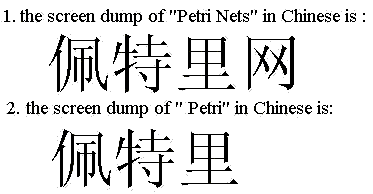
- Chinese:

- Czech:
 (ISO-8859-2)
- Danish: Petrinet
- Dutch: Petri-netten / Petri netten
- English: Petri Nets
- Esperanto: Petriaj Retoj (pronounced "peh-TREE-eye REHT-oy" with the r's trilled)
- Farsi (Persian):
 (pronounced "shabakeh-hoyeh-Petri")
- Finnish: Petri-verkot
- French: réseaux de Petri
- Galician: Redes de Petri
- German: Petrinetze (alternatively Petri-Netze)
- Greek:
 /
/  (ISO-8859-7)
- Hebrew:
 (pronounced "Reshet Petri", written right to left)
- Hungarian: Petri hálók
- Italian: Reti di Petri
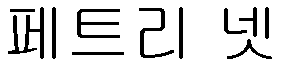
- Korean:

- Norwegian: Petrinett
- Japanese:
 (ISO-2022-JP JISX 0208-1983)
- Polish: Sieci Petriego
- Portuguese: redes de Petri
- Romanian: Retele Petri
- Russian:
 (ISO-8859-5)
- Slovak: Petriho siete
- Slovene:
 (ISO-8859-2)
- Swedish: Petrinät
- Spanish: redes de Petri
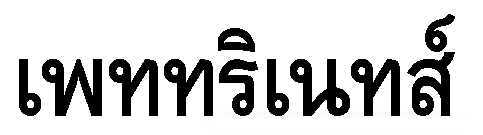
- Thai:
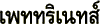
- Turkish:
 (ISO-8859-9)